How to Read Japanese Nail Art Menus: A Translation Guide for Tourists
You are in Japan. You found a nail salon on Hot Pepper Beauty. The photos look incredible. The reviews are glowing. You click on the menu. It is a wall of Japanese text with price numbers scattered throughout, and you cannot tell whether you are about to book a simple manicure or a two-hour nail art experience that costs ¥20,000.
Quick Answer: Japanese nail salon menus are written almost entirely in Japanese — a mix of kanji, katakana (used for borrowed English words like ジェル/gel), and industry-specific terminology that even Japanese-fluent speakers may not recognize. The core menu structure follows a predictable pattern: base service (ケア/care or ジェル/gel), length (ショート/short, ミディアム/medium, ロング/long), design complexity (ワンカラー/one color, グラデーション/gradation, アート/art), and add-ons (ストーン/stones, パーツ/parts, 3D). Knowing approximately 50 key terms will let you navigate any Japanese nail salon menu with confidence. This guide translates every common menu item, explains the pricing logic, and gives you the exact phrases to use when booking and communicating with your nailst.
You are in Japan. You found a nail salon on Hot Pepper Beauty. The photos look incredible. The reviews are glowing. You click on the menu. It is a wall of Japanese text with price numbers scattered throughout, and you cannot tell whether you are about to book a simple manicure or a two-hour nail art experience that costs ¥20,000.
This is the universal experience of every non-Japanese-speaking tourist who tries to visit a Japanese nail salon. The language barrier is not insurmountable — Japanese nailists are generally patient and accommodating — but navigating the menu, understanding what you are booking, and communicating your preferences requires some preparation.
Japan had 36.87 million international visitors in 2024, and nail salon visits have become an increasingly popular tourist activity, particularly among visitors from South Korea, Taiwan, China, and Western countries. Yet most Japanese nail salons have no English menu. The consultation happens in Japanese. The aftercare instructions are in Japanese. This guide exists to bridge that gap.
Here is everything you need to know to read a Japanese nail salon menu, book the right service, and communicate effectively with your nailst — even with zero Japanese language ability.
The Structure of a Japanese Nail Salon Menu
Japanese nail salon menus follow a consistent structure across most salons. Once you understand the pattern, you can decode any menu.
Tier 1: Service Category (サービスカテゴリー)
The top-level menu division:
| Japanese | Reading | English | Description |
|---|---|---|---|
| ジェルネイル | jeru neiru | Gel nails | The dominant service — gel application |
| ネイルケア | neiru kea | Nail care | Basic nail maintenance without color |
| フットネイル | futto neiru | Foot nails | Pedicure services |
| ハンドケア | hando kea | Hand care | Hand treatment/spa |
| オフ | ofu | Off/Removal | Gel or acrylic removal |
| 付け替え | tsukekae | Replacement | Removal + new application |
| スカルプ | sukarupu | Sculpt | Acrylic or gel nail extensions |
Key insight: "ジェルネイル" (gel nails) is what most tourists want. It appears on every Japanese nail salon menu and is the standard service.
Tier 2: Design Complexity (デザインの種類)
Within the gel nail category, services are divided by design complexity:
| Japanese | Reading | English | Description | Typical Price |
|---|---|---|---|---|
| ワンカラー | wan karaa | One color | Single solid color, all 10 nails | ¥4,000-6,000 |
| カラーグラデーション | karaa guradeshon | Color gradation | Gradient from tip to base | ¥5,000-8,000 |
| フレンチ | furenchi | French | French manicure style | ¥6,000-9,000 |
| ラメグラデーション | rame guradeshon | Glitter gradation | Glitter gradient effect | ¥5,000-8,000 |
| デザインコース | dezain koosu | Design course | Art included in set price | ¥7,000-15,000 |
| やり放題 | yarihoudai | All-you-can-do | Unlimited art within time limit | ¥8,000-15,000 |
| サンプルから選ぶ | sanpuru kara erabu | Choose from samples | Pick from pre-made designs | ¥6,000-12,000 |
| 持ち込みデザイン | mochikomi dezain | Bring-in design | Show a reference photo | ¥8,000-20,000+ |
The "やり放題" concept: This is unique to Japanese nail salons and incredibly popular. "Yarihoudai" literally means "all you can do" — the client pays a flat rate and gets unlimited nail art within a specified time window (typically 90-120 minutes). This is often the best value for tourists who want elaborate designs, because you get as much art as the nailst can complete in the time limit rather than paying per nail or per element.
"持ち込みデザイン" explained: Bringing reference photos (on your phone) is completely normal and expected in Japanese nail salons. The nailst will assess the complexity and quote a price before starting. This is the best approach for tourists because visual communication eliminates the language barrier for design preferences.
Tier 3: Add-Ons (オプション)
Individual design elements charged on top of the base service:
| Japanese | Reading | English | Typical Price |
|---|---|---|---|
| ストーン | sutoon | Stones/Rhinestones | ¥100-500 per stone |
| パーツ | paatsu | Parts/Charms | ¥200-1,000 per piece |
| 3D | surii dii | 3D art | ¥500-1,500 per nail |
| アート | aato | Art (hand-painted) | ¥300-1,000 per nail |
| ホログラム | horoguramu | Hologram | ¥200-500 per nail |
| ラメ | rame | Glitter/Lamé | ¥200-400 per nail |
| ミラー | miraa | Mirror | ¥300-800 per nail |
| オーロラ | oorora | Aurora | ¥300-600 per nail |
| マグネット | magunetto | Magnet | ¥300-800 per nail |
| ニュアンス | nyuansu | Nuance | ¥500-1,000 per nail |
| 長さ出し | nagasa dashi | Length extension | ¥500-1,500 per nail |
Tier 4: Care and Removal (ケア・オフ)
| Japanese | Reading | English | Typical Price |
|---|---|---|---|
| オフのみ | ofu nomi | Removal only | ¥2,000-3,500 |
| 他店オフ | tatten ofu | Removal of other salon's gel | ¥2,500-4,000 |
| 自店オフ | jiten ofu | Removal of this salon's gel | ¥0-1,500 |
| オフ込み | ofu komi | Removal included | Bundled in price |
| ケア | kea | Care (cuticle care, filing) | ¥1,500-3,000 |
| 甘皮処理 | amakawa shori | Cuticle treatment | Often included |
| ファイリング | fairingu | Filing (nail shaping) | Often included |
Critical term for tourists: "他店オフ" (tatten ofu). If you have existing gel nails from a salon outside Japan, you need "other salon removal." This costs more than removing their own gel because the nailst cannot be certain what products were used and must proceed more carefully. Always mention existing gel nails when booking.
Essential Vocabulary: 50 Terms That Cover 95% of Menus
Nail Parts (爪の部分)
| Japanese | Reading | English |
|---|---|---|
| 爪 | tsume | Nail |
| 自爪 | jizume | Natural nail |
| 爪先 | tsumasaki | Nail tip/Free edge |
| 甘皮 | amakawa | Cuticle |
| 根元 | nemoto | Nail base (near cuticle) |
| サイド | saido | Side of nail |
Nail Shapes (爪の形)
| Japanese | Reading | English |
|---|---|---|
| ラウンド | raundo | Round |
| オーバル | oobaru | Oval |
| スクエア | sukuea | Square |
| スクエアオフ | sukuea ofu | Squoval (rounded square) |
| ポイント | pointo | Pointed/Stiletto |
| アーモンド | aamondo | Almond |
| コフィン | kofin | Coffin/Ballerina |
Colors (カラー)
| Japanese | Reading | English |
|---|---|---|
| ピンク | pinku | Pink |
| レッド/赤 | reddo/aka | Red |
| ベージュ | beiju | Beige |
| ヌード | nuudo | Nude |
| ホワイト/白 | howaito/shiro | White |
| ブラック/黒 | burakku/kuro | Black |
| クリア | kuria | Clear |
| パステル | pasuteru | Pastel |
| くすみカラー | kusumi karaa | Muted/Dusty color |
| シアー | shiaa | Sheer/Translucent |
Design Styles (デザインスタイル)
| Japanese | Reading | English |
|---|---|---|
| シンプル | shinpuru | Simple |
| ナチュラル | nachuraru | Natural |
| エレガント | ereganto | Elegant |
| かわいい | kawaii | Cute |
| 大人 | otona | Adult/Sophisticated |
| 華やか | hanayaka | Gorgeous/Flashy |
| 上品 | jouhin | Refined/Classy |
| 個性的 | koseiteki | Unique/Individual |
Techniques (テクニック)
| Japanese | Reading | English |
|---|---|---|
| グラデーション | guradeshon | Gradient/Gradation |
| マーブル | maaburu | Marble |
| タイダイ | tai dai | Tie-dye |
| べっ甲 | bekkou | Tortoiseshell |
| ツイード | tsuiido | Tweed |
| フラワー | furawaa | Flower |
| レオパード | reopaado | Leopard |
| チェック | chekku | Plaid/Check |
| ドット | dotto | Dot/Polka dot |
| ボーダー | boodaa | Stripe/Border |
| 塗りかけ | nurikake | Half-painted (intentionally incomplete) |
| うるうる | uruuru | Dewy/Glossy |
Booking and Service Terms
| Japanese | Reading | English |
|---|---|---|
| 予約 | yoyaku | Reservation |
| 初回 | shokai | First visit |
| リピーター | ripiitaa | Repeat customer |
| クーポン | kuupon | Coupon |
| 施術時間 | sejutsu jikan | Treatment time |
| 所要時間 | shoyou jikan | Required time |
| 指名 | shimei | Request specific nailst |
| 担当 | tantou | Assigned/In charge |
| 料金 | ryoukin | Fee/Price |
| 税込 | zeikomi | Tax included |
| 税別 | zeibetsu | Tax excluded |
Important pricing note: 税込 vs. 税別. Always check whether prices include tax (税込/zeikomi) or exclude tax (税別/zeibetsu). Japan's consumption tax is 10%. A ¥10,000 service priced "税別" will actually cost ¥11,000 at payment.
How to Book a Japanese Nail Salon as a Tourist
Method 1: Hot Pepper Beauty (Recommended)
Hot Pepper Beauty (hotpepper.jp) is Japan's dominant beauty salon booking platform, used by the vast majority of nail salons. The platform has limited English interface support, but browser translation (Google Chrome's built-in translation) makes it navigable.
Step-by-step booking:
-
Search: Navigate to the nail salon section (ネイルサロン). Search by area (エリア) — enter the neighborhood name in Japanese (e.g., 渋谷/Shibuya, 新宿/Shinjuku, 銀座/Ginza, 原宿/Harajuku).
-
Filter: Use filters for price range (料金), area (エリア), and available date/time (日時).
-
Choose a coupon menu: Most salons offer "初回クーポン" (first-visit coupon) with 20-40% discounts. These are specifically designed for new customers and are the standard way to book.
-
Select date and time: The calendar shows available slots. Green = available, gray = full.
-
Enter information: Name (in English is usually fine), phone number (a Japanese phone number is ideal but some salons accept international numbers), and any notes. In the "ご要望" (requests) field, you can write "English OK?" or "英語メニューありますか" (Do you have an English menu?).
-
Confirm: You will receive a confirmation email. Many salons also send a reminder message.
Tip: Search for "英語OK" (English OK) or "外国人歓迎" (foreigners welcome) in salon descriptions to find salons with English-speaking staff. These are concentrated in tourist areas: Shibuya, Harajuku, Shinjuku, Ginza, and Roppongi in Tokyo; Shinsaibashi and Namba in Osaka; central Kyoto.
Method 2: Walk-In (Limited Success)
Walk-ins are possible but not recommended. Most Japanese nail salons require reservations because each nailst manages a tightly scheduled appointment book. Walking in without a reservation will likely result in being asked to book for a later time. In tourist-heavy areas like Harajuku, some salons accept walk-ins for simple services (one color, off only).
Method 3: Hotel Concierge
If your hotel has a concierge, ask them to book a nail salon appointment for you. Many high-end hotels in Tokyo and Osaka have relationships with nearby nail salons and can book in Japanese on your behalf, communicating your preferences.
Communicating with Your Nailst: A Phrase Guide
Even at English-friendly salons, having these phrases ready helps:
At Arrival
| English | Japanese | Reading |
|---|---|---|
| I have a reservation at [time] | [時間]に予約しています | [jikan] ni yoyaku shiteimasu |
| My name is [name] | [名前]です | [namae] desu |
| This is my first time here | 初めてです | hajimete desu |
| I don't speak Japanese well | 日本語があまり話せません | nihongo ga amari hanasemasen |
During Consultation
| English | Japanese | Reading |
|---|---|---|
| I want this design (showing phone) | このデザインにしたいです | kono dezain ni shitai desu |
| Simple is fine | シンプルでいいです | shinpuru de ii desu |
| One color please | ワンカラーでお願いします | wan karaa de onegaishimasu |
| Short length please | 短めでお願いします | mijikame de onegaishimasu |
| How much will this cost? | いくらになりますか? | ikura ni narimasu ka? |
| Is this price tax included? | 税込みですか? | zeikomi desu ka? |
| How long will it take? | どのくらい時間がかかりますか? | dono kurai jikan ga kakarimasu ka? |
Design Preferences
| English | Japanese | Reading |
|---|---|---|
| Natural looking | ナチュラルな感じで | nachuraru na kanji de |
| Cute | かわいい感じで | kawaii kanji de |
| Elegant/Sophisticated | 上品な感じで | jouhin na kanji de |
| Not too flashy | 派手すぎないように | hade suginai you ni |
| I'll leave it to you (trust the nailst) | おまかせで | omakase de |
| Shorter please | もう少し短くしてください | mou sukoshi mijikaku shite kudasai |
| Rounder shape please | 丸い形にしてください | marui katachi ni shite kudasai |
"Omakase" — The Power Word
"おまかせ" (omakase) means "I leave it to you" — the same concept as omakase dining. If you trust the nailst's aesthetic judgment, saying "omakase" gives them creative freedom within your stated parameters (color preference, occasion, budget). Many Japanese nailists produce their best work in omakase mode because they can use their full creative range rather than replicating a reference photo.
How to use omakase effectively: Give parameters. "Pink and white, omakase" (ピンクと白で、おまかせで). "Elegant, for a wedding, omakase" (エレガントで、結婚式に行くので、おまかせで). The nailst needs some direction — fully open omakase can produce results that do not match your expectations.
At Payment
| English | Japanese | Reading |
|---|---|---|
| Can I pay by credit card? | クレジットカードで払えますか? | kurejitto kaado de haraemasu ka? |
| Cash please | 現金でお願いします | genkin de onegaishimasu |
| Thank you very much | ありがとうございました | arigatou gozaimashita |
| The nails are beautiful | ネイルがとてもきれいです | neiru ga totemo kirei desu |
Payment notes: Many Japanese nail salons — especially smaller, independent salons — are cash only. Bring yen. Larger chain salons and salons in tourist areas more commonly accept credit cards. Always check the salon's payment methods on their Hot Pepper Beauty page (listed under "支払い方法"/payment methods) before your appointment.
Tipping: Do not tip. Tipping is not part of Japanese service culture and can cause confusion or discomfort. The service price includes the nailst's compensation. Expressing gratitude verbally ("ネイルがとてもきれいです" — the nails are very beautiful) is the appropriate way to show appreciation.
Common Menu Formats You Will Encounter
Japanese nail salon menus come in several formats. Recognizing the format helps you navigate faster.
Format 1: Tiered Course Menu (コース制)
The most common format. Services are organized into named courses at fixed prices:
Example:
- シンプルコース / Simple Course — ¥5,500 (one color or French + care)
- スタンダードコース / Standard Course — ¥7,700 (color + basic art on 2 nails + care)
- アートコース / Art Course — ¥9,900 (color + art on all nails + care + stones)
- プレミアムコース / Premium Course — ¥13,200 (unlimited art + 3D + stones + care)
With this format, choose the tier that matches your desired complexity. All elements within the course are included in the stated price.
Format 2: Base + Add-On Menu (ベース+オプション)
A base service price with individually priced add-ons:
Example:
- ベースジェル + ワンカラー / Base gel + one color — ¥4,400
- アート追加 / Add art — ¥550 per nail
- ストーン追加 / Add stones — ¥110-330 per stone
- パーツ追加 / Add parts — ¥220-880 per piece
This format gives maximum control but requires mental math. Your final bill depends on exactly what you choose. Ask the nailst for a total estimate before starting.
Format 3: Time-Based "Yarihoudai" Menu (時間制やり放題)
A fixed price for a fixed time window. All art within that time is included:
Example:
- 90分やり放題 / 90-minute all-you-can-do — ¥7,700
- 120分やり放題 / 120-minute all-you-can-do — ¥9,900
This is often the best value for tourists who want elaborate designs. The nailst works on your nails for the full time limit, applying as much art as possible. Bring reference photos showing complex designs and you will get maximum value from the time.
Format 4: Sample Selection Menu (サンプル制)
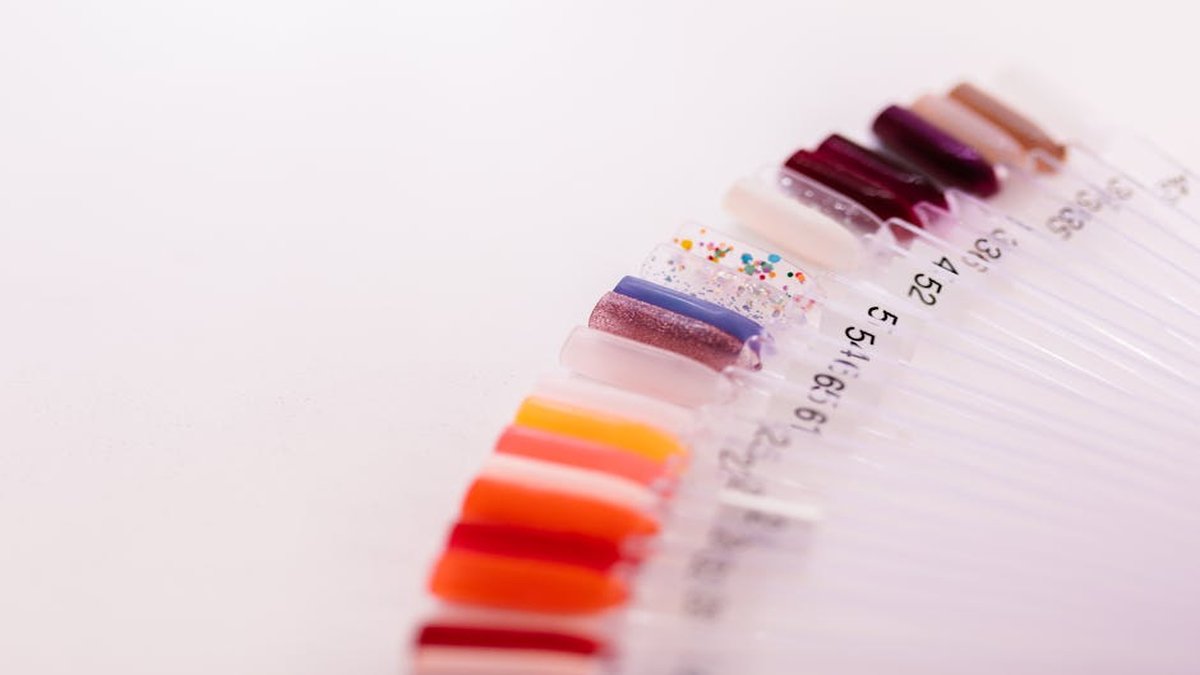
The salon displays physical sample nails (painted nail tips) or a digital gallery. You choose a design, and the price is attached to that specific design:
Example:
- Design A (simple gradient) — ¥6,600
- Design B (flower art, 2 nails) — ¥8,800
- Design C (full art, stones) — ¥11,000
This format eliminates pricing ambiguity — you see exactly what you get and what it costs. It is the easiest format for tourists because visual selection requires no language ability.
Special Terms You Might See on Coupons
Hot Pepper Beauty coupons contain additional terms worth understanding:
| Japanese | Reading | English |
|---|---|---|
| 初回限定 | shokai gentei | First visit only |
| 全員 | zenin | All customers (not first-visit only) |
| 平日限定 | heijitsu gentei | Weekdays only |
| 新規 | shinki | New customer |
| 再来 | sairai | Returning customer |
| オフ込み | ofu komi | Removal included |
| オフ別 | ofu betsu | Removal separate (extra charge) |
| カラー変更可 | karaa henkou ka | Color change OK (can change from photo) |
| 他メニューと併用不可 | ta menyuu to heiyou fuka | Cannot combine with other menus |
| 当日予約OK | toujitsu yoyaku OK | Same-day booking OK |
Critical coupon tip: "オフ込み" vs. "オフ別." If you have existing gel nails, make sure the coupon includes removal (オフ込み). If it says オフ別, removal costs extra — typically ¥2,000-3,500 on top of the coupon price. This is one of the most common sources of tourist bill surprise.
Understanding Price Ranges and Value
What Determines Price in Japanese Nail Salons
Japanese nail salon pricing is driven by:
Location: Central Tokyo (Ginza, Omotesando, Aoyama) commands the highest prices. Suburban and regional salons are 20-40% cheaper for equivalent services.
Nailst reputation: Famous nailists and competition-winning artists charge premium rates. Some top nailists in Tokyo charge ¥30,000+ for a full art set.
Design complexity: Simple one-color gel is the base price. Every additional element (art, stones, special effects like aurora or magnet) adds cost.
Salon tier: Chain salons (like FASTNAIL and Nail Quick) offer standardized pricing at accessible rates. Boutique salons charge more but offer more customized service.
Typical Tourist Budget Guide
| Budget Level | What You Get | Price Range |
|---|---|---|
| Budget | One color gel + basic care | ¥4,000-6,000 |
| Mid-range | Gel + gradient or French + minor art | ¥7,000-10,000 |
| Premium | Full art design (bring-in or omakase) | ¥10,000-15,000 |
| Luxury | Competition-level art, top nailst | ¥15,000-30,000+ |
Best value strategy for tourists: Book a "初回限定クーポン" (first-visit-only coupon) on Hot Pepper Beauty. These coupons typically offer 20-40% off the standard menu price and are available at most salons. A ¥10,000 art service might be ¥6,000-7,000 with a first-visit coupon. Since tourists rarely return to the same salon, every visit can use a first-visit coupon at a different salon.
Tourist-Friendly Nail Salons by City
Photo by Alehandra13 on Pixabay
Tokyo
Harajuku/Omotesando area: The highest concentration of art-focused nail salons. Many cater to international clients. Search Hot Pepper Beauty for salons in 原宿 (Harajuku) or 表参道 (Omotesando) with "英語OK" in their description.
Ginza: Premium salons with sophisticated designs. Higher prices but impeccable service. Several salons in the Ginza area specifically market to international visitors.
Shibuya: A mix of chain salons (affordable, English menus available) and boutique art salons. Good variety at multiple price points.
Shinjuku: Large selection of salons. The Kabukicho area has many walk-in-friendly salons. East Shinjuku has more boutique options.
Osaka
Shinsaibashi/Namba: Osaka's nail salon hub. Generally 10-20% cheaper than Tokyo for equivalent services. Strong art culture with a slightly bolder aesthetic than Tokyo salons.
Kyoto
Central Kyoto (Shijo/Kawaramachi): Smaller selection than Tokyo or Osaka but several excellent salons. Seasonal designs here often incorporate traditional Kyoto motifs (geisha, temples, matcha, cherry blossoms).
What to Expect During Your Appointment
Timeline
-
Arrival (5 minutes): Remove shoes at the entrance (many salons have an indoor shoe policy), change into slippers, take your seat. You may be offered a drink — tea, water, or in premium salons, a selection of beverages.
-
Consultation (10-15 minutes): Show your reference photos. The nailst will discuss options, suggest modifications, and confirm the price. This is the time to ask questions and set expectations.
-
Preparation (15-20 minutes): Cuticle care, nail shaping, surface preparation. This takes longer than you expect. Japanese nailists are meticulous with prep work because it determines how long the gel will last.
-
Color/Art application (30-90 minutes): Depends on design complexity. One color takes 30 minutes. Full art takes 60-90 minutes. The nailst works in focused silence for long stretches — this is normal, not unfriendly.
-
Finishing (5-10 minutes): Final curing, cuticle oil application, photography (the nailst may ask to photograph your nails for their portfolio — you can decline). Brief care instructions.
Etiquette Tips
Phones: Minimize phone use during the appointment. The nailst needs access to both your hands. If you must check your phone, do so during curing intervals.
Conversation: Light conversation is welcome but not expected. Japanese salon culture is quieter than American salon culture. Silence is comfortable and normal.
Restroom: If you need a restroom break, ask before the art application stage. Once gel art is in progress, a break disrupts the workflow significantly.
Running late: If you will be late, call the salon. Even 5 minutes late can affect the nailst's schedule. More than 15 minutes late may result in a shortened appointment or cancellation.
Decoding Hot Pepper Beauty Salon Pages
When browsing salons on Hot Pepper Beauty, these sections provide key information:
| Japanese | Reading | What It Shows |
|---|---|---|
| サロン情報 | saron jouhou | Salon information (address, hours) |
| アクセス | akusesu | Access/Directions (nearest station) |
| メニュー | menyuu | Menu/Services |
| クーポン | kuupon | Coupons (first-visit deals) |
| フォトギャラリー | foto gyararii | Photo gallery (nail designs) |
| 口コミ | kuchikomi | Reviews |
| スタッフ | sutaffu | Staff profiles |
| 席数 | sekisuu | Number of seats |
| 同時施術 | douji sejutsu | Simultaneous services (hand+foot) |
| 支払い方法 | shiharai houhou | Payment methods |
| 駐車場 | chuushajou | Parking |
| 最寄り駅 | moyori eki | Nearest station |
Review scores: Hot Pepper Beauty uses a 5-point rating system. Salons rated 4.5+ are generally excellent. Look at the number of reviews too — a 4.8 with 500 reviews is more reliable than a 5.0 with 3 reviews.
Frequently Asked Questions
Do Japanese nail salons accept walk-in tourists?
Most do not as standard practice, because Japanese nail salons operate on a reservation system with tightly managed schedules. However, chain salons like FASTNAIL, Nail Quick, and TiCTAC in tourist areas may have walk-in availability for simple services. Your best chance for a walk-in is weekday afternoons (Tuesday through Thursday, 14:00-16:00), which are typically the slowest times. Always try booking through Hot Pepper Beauty first — even same-day bookings are often possible if a slot is available.
How far in advance should I book?
For popular salons and weekend appointments: 1-2 weeks in advance. For weekday appointments at average salons: 2-3 days is usually sufficient. For first-visit coupon appointments (which are the most popular booking type): earlier is better, as coupon slots may be limited. During peak tourist seasons (cherry blossom season in March-April, autumn foliage in November), popular tourist-area salons book up further in advance.
What if I am not happy with the result?
Japanese nailists take pride in their work and will typically adjust or redo elements you are not satisfied with during the appointment. If a color looks different than expected or an art element is not what you envisioned, speak up immediately — saying "もう少し違う感じです" (mou sukoshi chigau kanji desu / it's a bit different from what I imagined) is polite and will prompt the nailst to make adjustments. After the appointment is complete, requesting changes becomes more difficult and may incur additional charges. Communication during the process is key.
Can men visit Japanese nail salons?
Yes. Male nail care is a growing segment in Japan — the nail market's expansion to ¥1,455 billion in 2025 was partly driven by increasing male clientele, according to Hot Pepper Beauty's census data. Most Japanese nail salons welcome male clients, though some smaller salons in residential areas may be primarily female-oriented. In Tokyo and Osaka, several salons specifically market men's nail care services (メンズネイル/men's nail). Services typically include nail shaping, buffing for natural shine, cuticle care, and optional clear or matte gel coating.
Should I remove my existing gel nails before visiting a Japanese salon?
If you have existing gel or acrylic nails from another country, tell the salon when booking and request "他店オフ" (other salon removal). Japanese nailists prefer to remove existing product themselves because it allows them to assess your natural nail condition and apply their gel on a clean surface. Removing at home with improper technique can damage your nails, which limits what the Japanese nailst can do. Budget an additional ¥2,500-4,000 for other-salon removal and an extra 20-30 minutes of appointment time.
Related Reading
- Japanese Nail Certification: JNA and JNE Guide
- Japanese vs. American Nail Salons: Why the Experience Is Completely Different
- Japanese Gel Nail Art: Unique Techniques
- Best Japanese Nail Tools: Beginner's Guide
Explore Your Style
Planning a nail salon visit in Japan? Use our Product Finder to research Japanese nail brands before your trip, take our Style Quiz to identify your ideal Japanese nail style and bring the result to your consultation, or browse our Technique Guide to learn about the techniques on offer so you can make informed menu choices.
— The Nail Atlas Team