Japanese Nail Care: Cuticle and Base Techniques That Extend Wear
- Japanese nail salons spend 15–25 minutes on cuticle and base preparation alone — more than many Western salons spend on the entire manicure — and this is the primary reason Japanese gel nails last 3–4 weeks
Quick Answer
- Japanese nail salons spend 15–25 minutes on cuticle and base preparation alone — more than many Western salons spend on the entire manicure — and this is the primary reason Japanese gel nails last 3–4 weeks
- The Japanese cuticle technique involves "dry care" (ドライケア) using a ceramic or metal pusher and nippers without soaking, preserving the nail plate's natural moisture barrier and improving gel adhesion
- Proper base preparation reduces gel lifting by up to 80% according to JNA (Japan Nailist Association) technical guidelines, making it the single most important factor in nail longevity
- The cuticle area is divided into three zones in Japanese nail education — the true cuticle (角質), the proximal nail fold (甘皮), and the pterygium (ルースキューティクル) — each requiring different handling techniques
Why Japanese Nails Last Longer: The Foundation Theory
Ask any Japanese nail technician (ネイリスト) why their work lasts 3–4 weeks while many salon gels start lifting at 2 weeks. The answer is always the same: preparation.
The gel, the art, the top coat — those matter. But they're only as good as the surface they're applied to. Japanese nail education (through the JNA certification system) dedicates an enormous portion of training to what happens before any color touches the nail. The JNE 2級 (second-level) exam includes a timed cuticle care section where candidates are evaluated on the precision of their cuticle work — a skill test that has no equivalent in American nail licensing.
The philosophy is simple: a perfectly prepared nail surface accepts gel like a primed canvas accepts paint. An improperly prepared surface is like painting on a dusty wall — it looks fine at first, then peels.
The Three Enemies of Gel Adhesion
-
Residual cuticle on the nail plate (ルースキューティクル): The invisible layer of dead skin that creeps over the nail surface from the cuticle area. If gel is applied over this layer, it lifts from underneath within 1–2 weeks. This is the #1 cause of premature lifting worldwide.
-
Oil and moisture on the nail plate: Natural oils from the nail bed create a barrier that gel can't bond to. Japanese preparation includes multiple dehydration steps to eliminate this.
-
Incorrect cuticle line: If gel touches the cuticle skin (even 0.1mm of overlap), body heat from the skin creates a weak point where lifting begins. Japanese application technique leaves a precise 0.3–0.5mm gap between the gel edge and the cuticle line — close enough to look seamless, far enough to prevent skin contact.
The Japanese Cuticle Care Process: Step by Step
 Ceramic Cuticle Pusher — gentle ceramic tip used in Japanese salons for precise cuticle push-back without damaging the nail plate. Photo courtesy of Nail Labo USA.
Step 1: Dry Cuticle Push (ドライプッシュバック) — 5 minutes
Unlike many Western nail services that soak nails in warm water before cuticle work, Japanese technique performs cuticle care dry. Water softens the nail plate and causes it to expand. When the nail dries and contracts after gel application, the gel lifts.
Tools: Metal pusher (ステンレスプッシャー) or ceramic pusher (セラミックプッシャー)
Technique:
- Hold the pusher at a 45° angle to the nail surface
- Starting from the center of the cuticle line, push gently toward the cuticle
- Work from center to left side, then center to right side
- Use small, controlled strokes — never force
- The goal is to push the proximal nail fold (甘皮) back to reveal the true nail surface, and to dislodge the transparent dead cuticle layer (ルースキューティクル) that sits on the nail plate
Pressure: Light enough that it doesn't cause pain or white stress marks on the nail. The pusher should glide, not scrape. Japanese training emphasizes that excessive pressure damages the nail matrix (the growth center under the cuticle), potentially causing permanent ridging.
For those new to this process, our beginners nail tools guide recommends starting with a ceramic pusher — it's gentler and reduces the risk of nail plate damage.
 KOKOIST Cuticle Nipper (Pink Gold) — precision Japanese stainless steel nipper for clean cuticle work. Photo courtesy of KOKOIST USA.
Step 2: Cuticle Nipping (甘皮カット) — 5–8 minutes
After pushing, loose cuticle skin and hangnails are carefully removed with nippers (ニッパー).
Tools: Cuticle nippers (キューティクルニッパー) — Japanese nippers are manufactured to incredibly tight tolerances. The blades of professional Japanese nippers (brands: 内海 Utsumi, 光 Hikari) close with a consistent gap of 0.1mm or less.
Technique:
- Open nippers to minimum width
- Position blade tips at the edge of raised cuticle
- Cut in small, sequential snips — never one long cut
- Follow the cuticle line's natural curve
- Remove only dead, dry skin — never cut live tissue
- Work from one side of the nail to the other in a single direction
Common mistakes:
- Cutting too deep, causing bleeding and infection risk
- Pulling skin rather than cutting cleanly
- Using dull nippers that crush rather than cut
Japanese salons sharpen their nippers regularly — professional sharpening services (ニッパー研ぎ) are a dedicated business in Japan, charging ¥2,000–3,000 per pair.
Step 3: Sanding / Buffing (サンディング) — 3–5 minutes
The nail plate is lightly sanded to create micro-texture for gel adhesion.
Tools: 180–240 grit file or sponge buffer
Technique:
- Use light, even strokes across the entire nail surface
- Sand from cuticle area to free edge
- Pay special attention to the cuticle area (the most common lifting zone)
- The nail should appear uniformly matte with no shiny spots
Critical rule: Do not over-sand. The nail plate has approximately 100 layers. Each sanding removes 1–2 layers. Over-sanding thins the nail to the point where it becomes flexible, causing gel to crack and lift. Japanese technique uses the minimum sanding necessary — just enough to remove shine, not enough to thin the nail significantly.
For short nails, sanding is even more conservative because short nails are already thinner at the free edge.
Step 4: Dust Removal (ダスト除去) — 1 minute
All filing dust must be completely removed from the nail surface.
Tools: Dust brush (ダストブラシ), followed by a lint-free wipe (ワイプ)
Technique:
- Brush all visible dust from the nail and surrounding skin with a soft brush
- Wipe each nail with a lint-free pad soaked in nail prep solution or isopropyl alcohol
- Inspect each nail — any remaining dust creates a bump under the gel
Step 5: Dehydration and Priming (脱水・プライマー) — 2 minutes
The final preparation step before gel application.
Tools:
- Nail dehydrator (ネイルデハイドレーター) — removes moisture from the nail plate
- Primer (プライマー) — creates a chemical bond between the nail plate and the base gel
Technique:
- Apply dehydrator to each nail, let evaporate (30 seconds)
- Apply primer to each nail in a thin coat
- Do not cure or let dry excessively — most primers are tacky by design
Product note: Japanese gel systems (like Pregel, Leafgel, and Vetro) are designed as complete systems where dehydrator, primer, base gel, and top gel are all engineered to work together. Mixing brands at the preparation stage can compromise adhesion.
Base Gel Application: The Japanese Precision Method
After cuticle prep, base gel application in Japanese salons follows a specific protocol that maximizes both adhesion and longevity.
The 0.5mm Rule
The single most important rule: leave a 0.3–0.5mm gap between the gel edge and the cuticle line. This gap is invisible to the casual observer but prevents gel from touching skin, which is the starting point for 90% of lifting.
How Japanese technicians achieve this:
- Load a thin art brush (ライナーブラシ) with base gel
- Draw a precise line along the cuticle margin, 0.5mm from the skin
- Fill in the rest of the nail with a flat brush
- Cure under LED lamp
This two-brush technique (outline + fill) is standard in Japanese salons and virtually unknown in most Western salons, where base gel is applied with a single bottle brush.
Thin, Even Layers
Japanese base gel is applied in 1–2 thin layers rather than one thick layer. Each layer is cured separately. Thin layers cure more completely (UV/LED light penetrates evenly), reducing the risk of uncured gel at the base — a common cause of both lifting and allergic reactions.
Apex Placement
For nails that need structural support (thin nails, nails prone to breaking), Japanese technicians build a slight apex (the highest point of the gel layer) at the stress point — approximately 1/3 of the way from the free edge. This distributes mechanical stress across the nail, preventing cracks and breaks.
This technique is especially important for maintaining gel nails on short nails where the free edge is minimal and stress concentrates at the cuticle line.
At-Home Cuticle Care Between Salon Visits
Photo by lubovlisitsa on Pixabay
Japanese nail culture emphasizes maintenance between salon visits. Proper at-home cuticle care extends gel wear and keeps nails healthy.
Daily Care
- Cuticle oil (キューティクルオイル): Apply morning and evening. Japanese brands like OPI Pro Spa, Pregel Cuticle Oil, and Uuka offer specialized nail oils with jojoba and vitamin E. Price: ¥800–2,000 (~$5–14 USD).
- Hand cream: Apply after washing hands. Dry cuticles pull away from the gel, creating lift points.
Weekly Care
- Gentle cuticle push: Using a rubber-tipped orangewood stick or soft pusher, gently push back cuticle growth after bathing (when skin is naturally softened). This prevents cuticle from growing over the gel surface.
- Nail oil massage: Massage cuticle oil into each nail base for 30 seconds, using circular thumb motions. This stimulates blood flow to the matrix, promoting healthy nail growth.
What to Avoid
- Picking or peeling at lifted gel edges — this removes layers of the natural nail plate, causing thinning and damage
- Using nails as tools (opening cans, scratching stickers) — creates leverage that lifts gel from the free edge
- Excessive water exposure without gloves — prolonged soaking (dishes, baths) softens the nail plate under the gel, weakening adhesion
- Acetone-based removers near gel nails — acetone dissolves gel and weakens the bond
The Connection Between Cuticle Health and Nail Growth
Healthy cuticles produce healthy nails. The cuticle's biological function is to seal the space between the skin and the nail plate, preventing bacteria and fungi from reaching the nail matrix. When cuticles are damaged — through aggressive cutting, neglect, or chemical exposure — the seal breaks, potentially causing:
- Infections (paronychia)
- Ridged or uneven nail growth
- Weak, splitting nails
- Discoloration
Japanese nail education frames cuticle care as health care, not just beauty care. The meticulous, conservative approach — push gently, cut minimally, moisturize constantly — preserves the cuticle's protective function while creating the ideal surface for gel application.
This is also why the Japanese vs. American nail salon experience feels so different — the Japanese salon spends more time on care than on decoration.
Related Reading
- Japanese Gel Nail Art: Unique Techniques
- Aurora Nails: Japanese Iridescent Effect Guide
- Pregel vs Leafgel vs Vetro: Japanese Gel Comparison
Frequently Asked Questions
Why do Japanese salons do "dry" cuticle care instead of soaking? Water absorption causes the nail plate to expand temporarily. If gel is applied to an expanded nail, when the nail dries and contracts (within hours), the gel doesn't contract with it — creating microscopic gaps that become lifting points. Japanese dry care preserves the nail's natural state, ensuring that the gel bonds to the nail at its true size. Clinical tests conducted by the JNA found that nails prepared with dry technique retained gel adhesion 40% longer than water-soaked nails using the same gel system.
How often should cuticles be professionally maintained? Japanese salons recommend cuticle care every 3–4 weeks, coinciding with gel fill or change appointments. Between professional visits, daily cuticle oil application and weekly gentle pushing at home maintain cuticle health. Letting cuticles grow unchecked for longer than 4 weeks allows significant dead cuticle buildup on the nail plate, which requires more aggressive removal and increases the risk of nail plate damage during the next salon visit.
Can I do professional-level cuticle care at home? The pushing and moisturizing steps are absolutely home-friendly. Using a ceramic pusher (¥500–1,000 / ~$3–7 USD) after bathing and applying cuticle oil daily replicates the maintenance portion of salon care. However, cuticle nipping (cutting) is best left to trained technicians — improper cutting is the #1 cause of cuticle damage and infection. If you must cut at home, invest in quality nippers (¥3,000–5,000 / ~$20–34 USD) and only remove visible dry, dead skin — never cut live tissue.
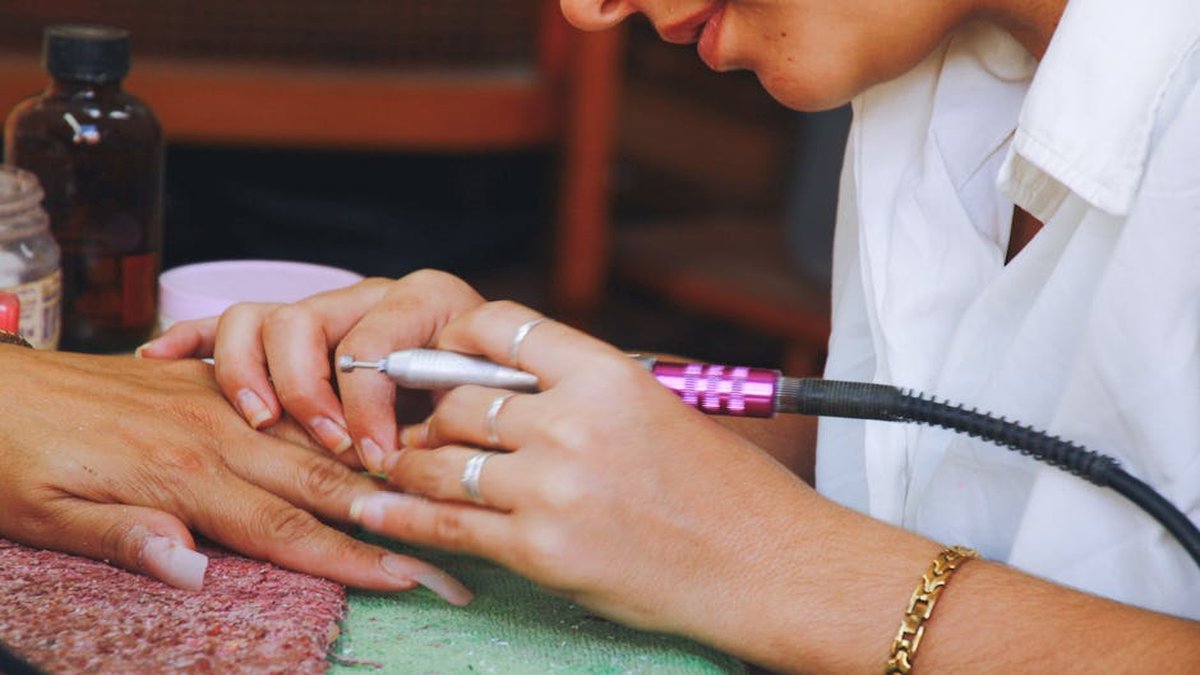
What's the difference between Japanese and Russian manicure techniques? Russian manicure uses an e-file (electric drill) to remove cuticle and dead skin, often cutting very close to the live tissue for an ultra-clean cuticle line. Japanese technique uses manual tools (pusher and nippers) with a more conservative approach — removing less tissue but preserving more of the cuticle's protective function. Japanese technique prioritizes nail health and longevity; Russian technique prioritizes the cleanest possible visual result. Both produce excellent gel adhesion when done correctly. The Russian method carries slightly higher risk of nail damage and infection if performed by inexperienced technicians.
Does cuticle oil really make gel nails last longer? Yes. Cuticle oil keeps the skin around the nail flexible and hydrated, preventing it from pulling away from the gel edge — which is how most lifting begins. A hydrated cuticle also grows more slowly, delaying the point at which visible nail growth creates an unsightly gap between the cuticle line and the gel edge. Japanese nail technicians universally recommend daily cuticle oil use and estimate it extends the wearable period of a gel set by 3–5 days on average.
— The Nail Atlas Team